
-
Menu
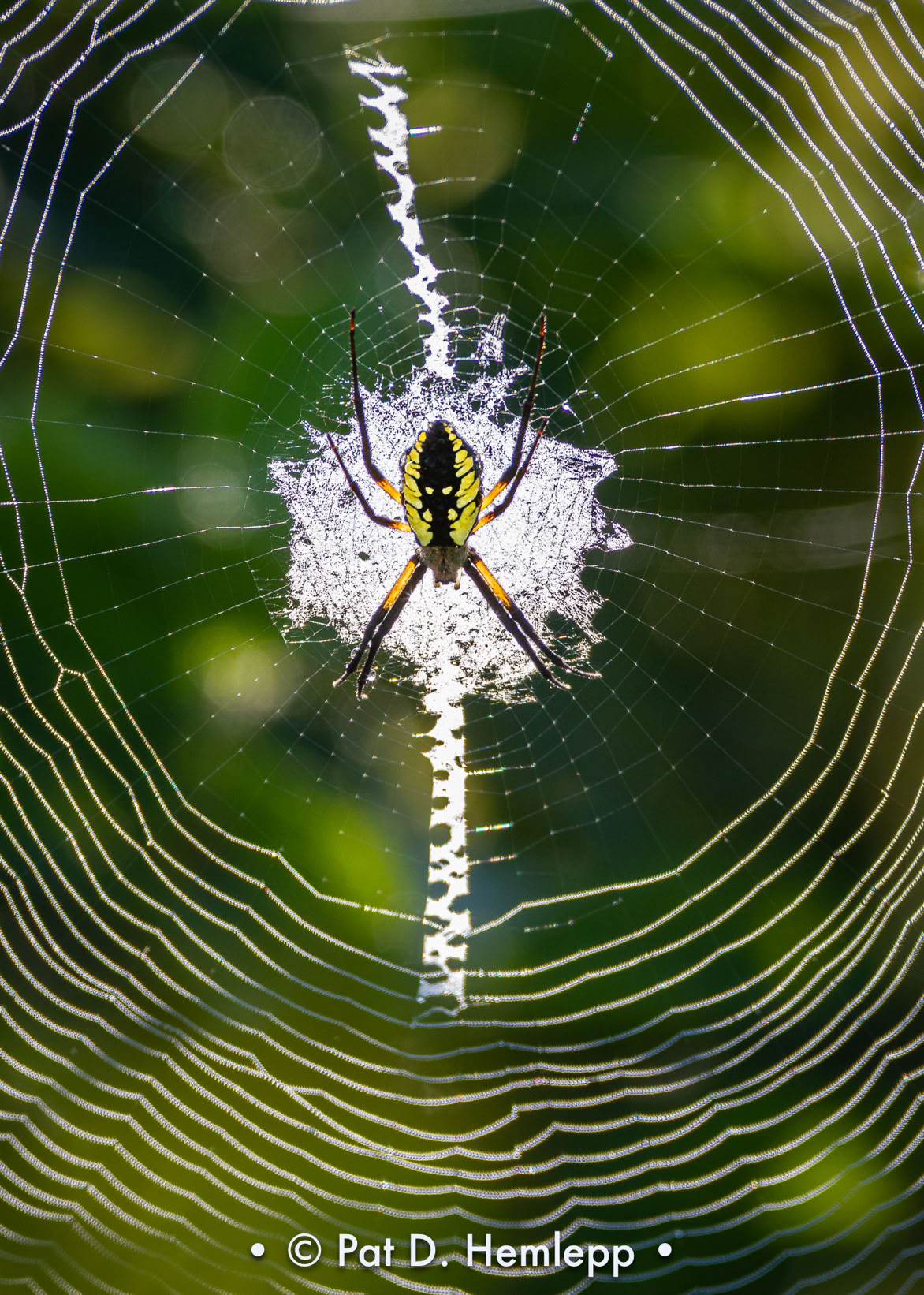
A black and yellow garden spider rests on its web, Sharon Woods Metro Park, Westerville, Ohio.
Tech specs
Common scene, but not an easy one to capture
This is a scene I see somewhat frequently when I’m on a photo hike through a local park: a spider resting on its web that’s strung between plants in a field or tree limbs in the woods.
But just because it’s a common scene doesn’t mean it’s an easy scene for me to photograph, especially with the equipment I carry on my photo hikes.
The vast majority of my photo hikes are in search of birds. I’m carrying a camera equipped with a very long, very heavy 600-millimeter lens used to bring distant objects close. It’s great for a four-inch-long bird perched about 20 feet away. It’s not so great for focusing on a spider less than an inch long clinging to a web 20 feet away that tends to sway in the ever-present breeze.
I’ve had more than my share of failed attempts at photographing spiders on webs using this lens. It would be much easier to use a shorter lens, possibly a macro lens, and stand a few feet from the web. But I have to make do with what I’m carrying.
I found this female black and yellow garden spider clinging to its web in a field in a park north of Columbus, Ohio. I had an unobstructed view of the spider and web, which seldom happens. Knowing my long history of out-of-focus spider photos, I probably took about 50 photos of this spider, refocusing after every few shots in hopes of getting one in focus.
It worked.
The female black and yellow garden spider is typically a little under an inch in length with black and yellow markings. The male is about a quarter inch in length and is primarily brown.
The female spins the web, which is a circular shape up to two feet in diameter with a dense tangle of silk, known as a stabilimentum, in the center. The spider waits in the center of the web, usually facing straight down, and waits for prey to become ensnared. The female’s web is substantially larger than the male's small zigzag web, often found nearby.
Black and yellow garden spiders are not aggressive. Their bite contains a venom used to paralyze and liquefy insect prey. The venom is relatively harmless to humans, although those with severe allergies could suffer a reaction similar to a bee sting.