
-
Menu
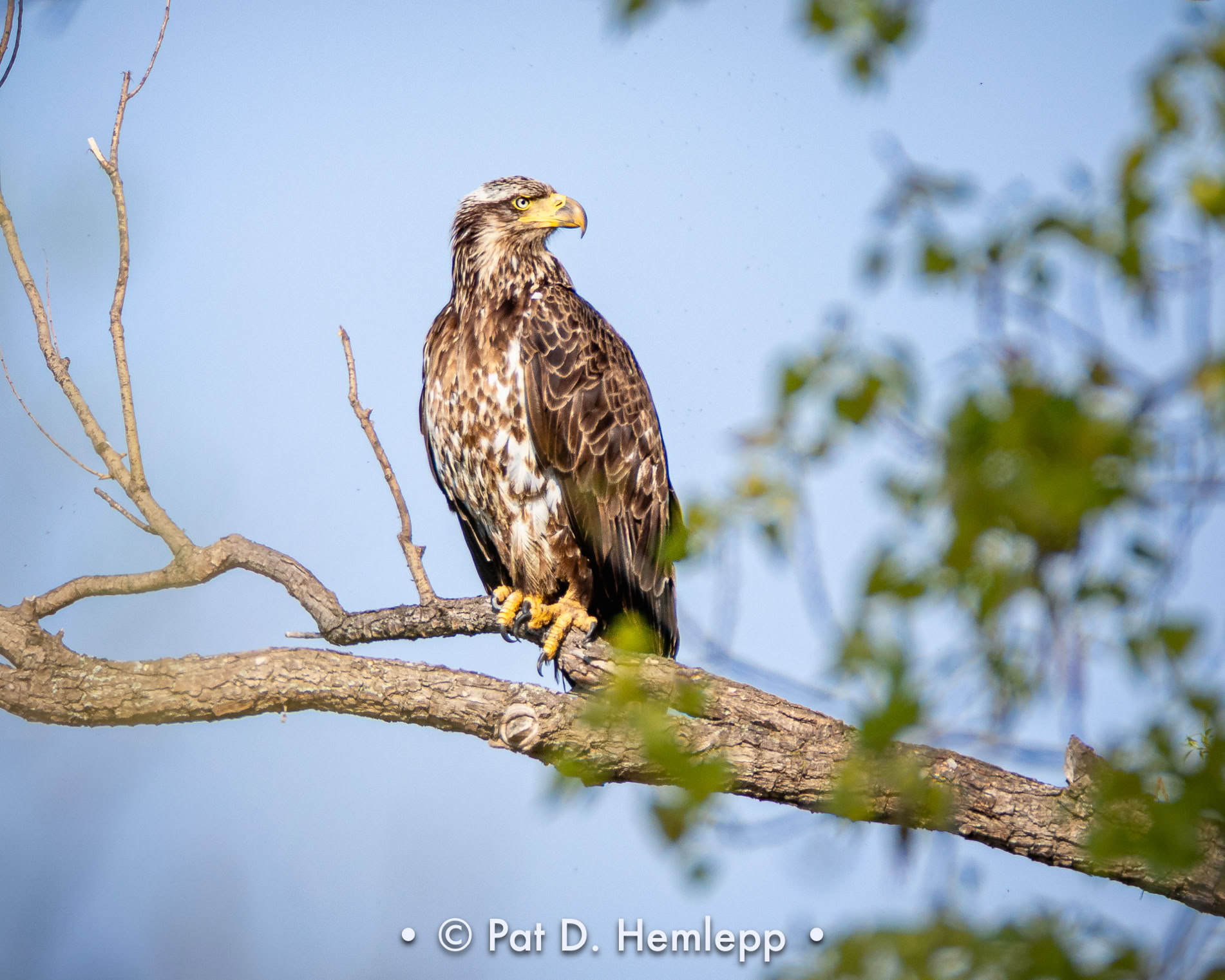
Immature Bald Eagle on limb, Ottawa National Wildlife Refuge, Oak Harbor, Ohio.
Tech specs
I’ve seen a number of Bald Eagles over the last decade or so, evidence of the rebound in the bird’s population. Bald Eagles were once abundant in North America, but the species became rare by the mid 1900s because of shooting, poisoning and various other issues caused by the growth of human population. Bald Eagles were listed for protection under the Endangered Species Act in 1978 .
The only Bald Eagles I saw during my youth were in zoos. I never saw one in the wild.
But the protection efforts have worked, with the eagle population increasing by about 4 percent a year since the 1970s. The U.S. Fish and Wildlife Services has estimated the Bald Eagle population in the lower 48 states to be close to 320,000 today. And that leads to more random sightings.
For instance, a few years ago, my wife and I were driving back to Central Ohio from Eastern Kentucky, the area where we grew up. We crossed the Ohio River, and shortly after reaching the Ohio side, we saw a bald eagle perched on a tree looking over the water. It was a random but surprising treat.
And we see them frequently near our Florida home, perched in trees or flying over the community.
But most of my Bald Eagle photos are from May trips to the southern bank of Lake Erie — Ohio’s “north coast” — to photograph migrating warblers. Bird watchers from around the world show up in parks in that area for a week each May to watch the massive number of warblers in the trees and fields. It’s been dubbed the Biggest Week in American Birding.
I get a lot of warbler photos there — I have shots of 22 varieties of warblers in my files — but there’s a lot more wildlife in the area besides warblers.
I know the locations of several Bald Eagle nests in the area. Eagles mate for life and typically return to the same nest each year. That has allowed me to get a number of photos of adult eagles perched on the nests or of eagle hatchlings peering out of the nest.
And I also have a number of photos of immature Bald Eagles, like this one perched in a tree near the edge of Lake Erie in Ottawa National Wildlife Refuge. Unlike the adult birds with bright white feathers on their heads, immature bald eagles have mostly dark heads and tails. The young birds attain adult plumage in about five years.
But immature birds already have the size of adult birds, standing up to about three feet tall. They already have the imposing stare of the adult eagle, as this one demonstrates. And they already have the massive talons of an adult Bald Eagle, as this one shows while grasping the limb.
I know when I visit the Northern Ohio parks during bird week that I’m going to see warblers, but it’s always special to have a chance to photograph a few Bald Eagles.